Agile Ninja Runner: India's Beloved Action-Adventure Mobile Game
Table of Contents
- 1. Introduction
- 2. Gameplay
- 2.1 Controls
- 2.2 Level Design
- 2.3 Power-Ups & Collectibles
- 2.4 Progression System
- 2.5 Difficulty Levels
- 3. Plot & Lore
- 3.1 Protagonist: Arjun
- 3.2 Setting & Locations
- 3.3 Villains & Allies
- 3.4 Narrative Progression
- 4. Development
- 4.1 Development Team
- 4.2 Inspiration & Vision
- 4.3 Challenges & Solutions
- 4.4 Technical Specifications
- 5. Release & Distribution
- 5.1 Launch Campaign
- 5.2 Platforms
- 5.3 Post-Release Updates
- 6. Key Features
- 6.1 Regional Language Support
- 6.2 Offline Play
- 6.3 UPI Integration
- 6.4 Social & Competitive Features
- 6.5 Accessibility
- 7. Reception
- 7.1 Critical Reviews
- 7.2 User Feedback
- 7.3 Player Base Growth
- 7.4 Awards & Nominations
- 8. Competitive Scene
- 8.1 Tournaments & Events
- 8.2 Esports Potential
- 9. Merchandise & Spin-Offs
- 10. Controversies
- 11. Future Updates & Sequel
- 12. Related Games by Daman Games
- 13. References
1. Introduction
In the crowded mobile gaming market, Agile Ninja Runner stands out as a testament to India's growing potential in creating world-class, localized content. Developed by Daman Games—a studio founded in 2018 with a mission to "make games that Indians love"—the title fills a long-standing gap for action games that resonate with desi audiences, moving beyond generic global settings to celebrate India's cultural diversity and mythology.
The game's core premise revolves around speed, agility, and adventure—traits deeply rooted in Indian storytelling, from the Mahabharata's Arjuna to the legend of Hanuman. Unlike many international runner games that focus solely on endless running, Agile Ninja Runner introduces a compelling narrative, character progression, and combat elements that add depth without compromising accessibility. This balance has made it a hit among both casual players (looking for quick, fun sessions) and hardcore gamers (seeking challenges and competitive leaderboards).
One of the game's most significant achievements is its optimization for India's mobile landscape. With over 60% of Indian gamers using budget smartphones (priced under ₹15,000) and inconsistent internet connectivity in rural areas, Daman Games prioritized two key features: a file size under 100MB and full offline play. These decisions ensured that Agile Ninja Runner is accessible to millions who might otherwise be excluded from high-quality mobile gaming experiences.
Since its launch, the game has crossed 15 million downloads globally, with 85% of its player base in India. It has become a cultural phenomenon, with viral trends on TikTok and Instagram, school children using its fitness mode to track steps, and even regional festivals featuring Agile Ninja Runner-themed events. For Daman Games, the success of Agile Ninja Runner is more than just a commercial win—it's a validation of their vision to put Indian gaming on the global map while staying true to local roots.
2. Gameplay
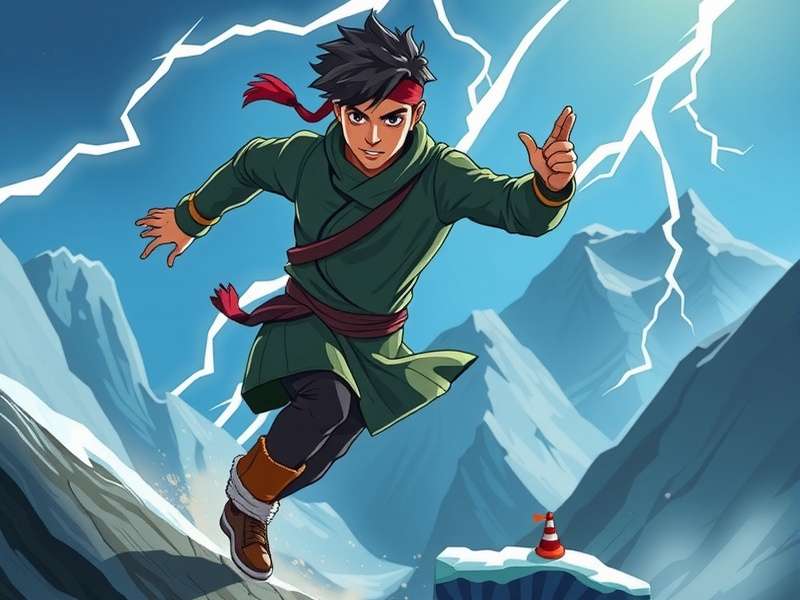
Agile Ninja Runner combines the core mechanics of endless runners (dodging obstacles, collecting items) with action-adventure elements (combat, narrative, character progression) to create a engaging, replayable experience. The game is designed for short bursts of play (5-10 minutes per level) but offers enough depth to keep players coming back for more—whether to beat their high score, unlock new skins, or progress through the story.
At its heart, Agile Ninja Runner is about mastering movement and timing. Players control Arjun as he runs automatically through diverse environments, with the goal of reaching the end of each level (or surviving as long as possible in endless mode) while avoiding obstacles, defeating enemies, and collecting rewards. The gameplay loop is simple to learn but challenging to master, making it accessible to players of all ages and skill levels.
2.1 Controls
The game features intuitive touch controls optimized for mobile devices, with no complex button combinations—perfect for both new and experienced gamers. Daman Games conducted extensive user testing to refine the controls, ensuring they work seamlessly on both small smartphones and large tablets.
• Swipe Up: Jump over obstacles (e.g., rocks, pits, low walls) • Swipe Down: Slide under barriers (e.g., tree branches, archways) • Swipe Left/Right: Dodge sideways to avoid obstacles or switch lanes • Tap: Basic attack (punch/kick) to defeat enemies • Double Tap: Special attack (unlocked at level 5) for more powerful strikes • Hold & Swipe: Perform a dash (unlocked at level 10) to cover long distances quickly
Players can adjust swipe sensitivity in the settings menu, a feature added based on feedback from beta testers who preferred different control responsiveness. The game also supports both left-handed and right-handed play, with an option to flip the control layout.
2.2 Level Design
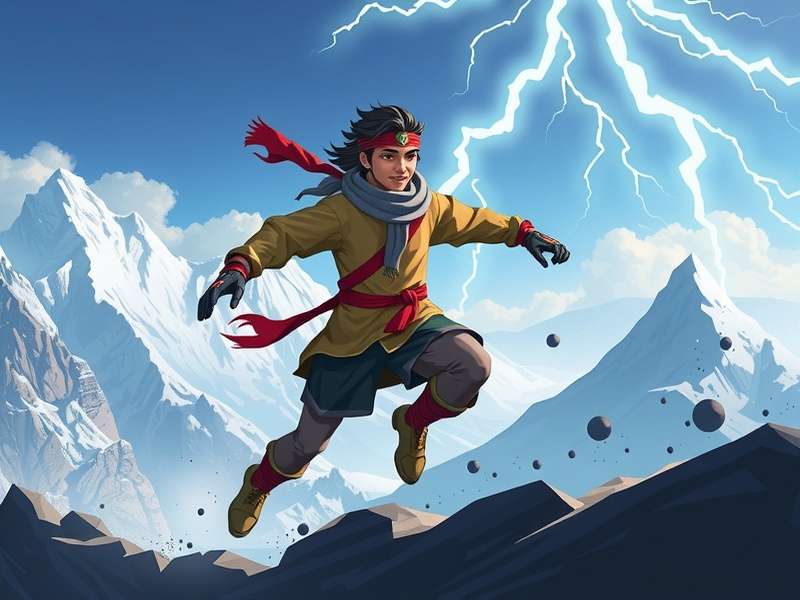
Agile Ninja Runner features five distinct worlds, each inspired by a different region of India, with 20 levels per world—totaling 100 story levels. Each world has a unique visual style, soundtrack, and set of obstacles, ensuring the gameplay never feels repetitive. Additionally, the game includes an endless mode for each world, where players can run indefinitely to earn high scores and climb leaderboards.
• Himalayan Peaks: Snowy mountains with icy paths, avalanches, and stone temples. Obstacles include falling boulders, frozen lakes, and narrow bridges. The soundtrack features traditional Himalayan music with flutes and drums. • Ancient Temple Ruins: Overgrown ruins of a medieval temple, with crumbling pillars, trapdoors, and secret passages. Obstacles include swinging axes, fire pits, and poisonous snakes. The soundtrack blends classical Indian music with eerie ambient sounds. • Urban Mumbai Streets: Bustling city streets with cars, buses, and crowded markets. Obstacles include traffic, construction sites, and narrow alleyways. The soundtrack features upbeat Bollywood-inspired music with electronic beats. • Thar Desert Oases: Sandy dunes with occasional oases, camels, and desert villages. Obstacles include sandstorms, quicksand, and falling palm trees. The soundtrack uses traditional Rajasthani instruments like the sarangi and dholak. • Coastal Kerala Backwaters: Lush green backwaters with houseboats, coconut trees, and narrow canals. Obstacles include floating logs, low-hanging branches, and crocodiles. The soundtrack features melodic Malayalam folk music with percussion.
Levels are designed with a mix of linear and branching paths, giving players choices that affect their score and collectible rewards. For example, taking a high path might lead to more power-ups but requires precise jumps, while a low path is safer but offers fewer rewards. This branching design adds replayability, as players can revisit levels to explore different routes.
Each level ends with a boss fight (every 5 levels) or a mini-boss fight (every 10 levels), adding variety to the gameplay. Bosses are themed around the world they appear in—e.g., a Yeti in the Himalayan Peaks, a corrupted temple guardian in the Ancient Ruins, a gang leader in Mumbai Streets. Boss fights require players to use a combination of dodging and attacking, with unique patterns that must be learned to succeed.
2.3 Power-Ups & Collectibles
Power-ups are a key part of Agile Ninja Runner's gameplay, providing temporary boosts that help players overcome obstacles and defeat enemies. They are scattered throughout levels or can be purchased in the in-game store using coins (earned by playing) or gems (earned by completing challenges or via in-app purchases).
• Lotus Shield 🪷: Protects Arjun from one hit by an enemy or obstacle. Lasts for 10 seconds or until hit. Inspired by the sacred lotus flower, a symbol of purity in Indian culture. • Hanuman's Leap 🦍: Grants a super jump that clears even the tallest obstacles. Lasts for 5 seconds, allowing players to cover large gaps or reach high collectibles. Named after Hanuman, the monkey god known for his strength and agility. • Shiva's Blade ⚔️: Turns Arjun's attacks into one-hit kills for 8 seconds. Effective against tough enemies and mini-bosses. Inspired by Shiva's trident, a weapon of divine power. • Samosa Boost 🥘: Increases Arjun's speed by 50% for 7 seconds, allowing him to cover more distance quickly. Collecting additional samosas extends the boost duration. A playful nod to India's favorite street food. • Vada Pav Collectible 🥪: Not a power-up, but a key collectible that unlocks rewards. Collect 10 vada pavs to earn a free power-up, 50 to unlock a skin, and 100 to unlock a special ability. Another tribute to desi street food culture. • Agile Sapphire Shard 💎: Collectible pieces of the sacred gem that advance the story. Found in hidden locations in each level, encouraging exploration.
Power-ups can be upgraded using coins, increasing their duration or effectiveness. For example, upgrading the Lotus Shield extends its duration to 15 seconds, while upgrading Hanuman's Leap increases the jump height. This upgrade system adds a strategic layer to the game, as players must decide which power-ups to prioritize based on their playstyle.
2.4 Progression System
Agile Ninja Runner features a robust progression system that rewards players for skill and dedication. As players complete levels, they earn experience points (XP), coins, and collectibles, which are used to level up Arjun and unlock new content.
• Leveling Up: Arjun starts at level 1, with basic stats (speed, attack power, health). Each level up increases these stats, making him stronger and faster. Leveling up also unlocks new abilities (e.g., double jump at level 8, dash attack at level 15). • Skins: Over 50 skins are available, ranging from traditional ninja attire to desi-themed outfits (e.g., "Desi Biker Ninja", "Punjabi Turban Ninja") and mythological skins (e.g., "Hanuman Ninja", "Shiva Ninja"). Skins are unlocked by completing challenges, collecting vada pavs, or purchasing them in the store. Some skins offer stat boosts (e.g., the Hanuman skin increases jump height by 20%). • Abilities: Passive and active abilities that enhance gameplay. Passive abilities (e.g., "Coin Magnet" to attract coins, "Shield Regen" to restore shields over time) are unlocked by leveling up. Active abilities (e.g., "Fire Kick" to deal area damage, "Lotus Barrier" to protect from all attacks for 3 seconds) are unlocked by completing story milestones. • Challenges: Daily and weekly challenges that offer extra rewards. Daily challenges include tasks like "Complete 3 levels without dying" or "Collect 100 coins in one run". Weekly challenges are more difficult, such as "Defeat 5 bosses using only basic attacks" or "Survive 5 minutes in endless mode".
The progression system is designed to be inclusive, with rewards available for both casual players (who play a few minutes a day) and hardcore gamers (who grind for high scores). Daman Games avoided pay-to-win mechanics, ensuring that all skins and abilities can be unlocked through gameplay—though players can purchase gems to speed up progression if they choose.
2.5 Difficulty Levels
Agile Ninja Runner offers four difficulty levels to cater to different player skill levels, a feature added after beta testers requested more flexibility. Players can switch difficulty levels at any time, with each level offering different rewards:
• Easy: Ideal for new players or casual gamers. Obstacles are spaced further apart, enemies deal less damage, and power-ups are more common. Rewards: 50% more coins per level. • Medium: Balanced difficulty for most players. Obstacles and enemies are challenging but fair. Rewards: Standard coins and XP. • Hard: For experienced gamers seeking a challenge. Obstacles are faster and more frequent, enemies are tougher, and power-ups are rare. Rewards: 100% more XP per level and rare collectibles. • Expert: For pro gamers looking to test their skills. Obstacles and enemies are relentless, with complex patterns that require precise timing. Rewards: Exclusive skins, 200% more XP, and a spot on the Expert Leaderboard.
The game also includes a "Adaptive Difficulty" option, which adjusts the challenge based on the player's performance. For example, if a player dies multiple times in a level, the game will temporarily reduce the number of obstacles; if a player completes levels without dying, the difficulty will gradually increase. This feature ensures that the game remains engaging for all players, regardless of their skill level.
3. Plot & Lore
Unlike many runner games that prioritize gameplay over story, Agile Ninja Runner features a rich, culturally rooted narrative that drives the action. The plot draws inspiration from Indian mythology (the Mahabharata, Ramayana) and folk tales, with a modern twist that resonates with contemporary audiences. The story is told through animated cutscenes (voiced in 8 regional languages) and in-game dialogues, with character development that makes players invested in Arjun's journey.
The lore of Agile Ninja Runner is centered around the "Agile Sapphire"—a sacred gem said to be created by the gods to protect India from evil. For centuries, the gem was guarded by the Ninja Clan of the Himalayas, a secret order of warriors trained in ancient martial arts. Arjun, the youngest member of the clan, is chosen to be the next guardian of the sapphire—until it is stolen by the evil warlord Raka.
Raka, a former member of the Ninja Clan who turned to darkness, believes the Agile Sapphire will give him the power to conquer India and establish a tyrannical empire. With the gem in his possession, Raka's power grows, and he unleashes his minions across the country to crush any resistance. Arjun's mission: travel across India, defeat Raka's forces, and retrieve the Agile Sapphire before it's too late.
3.1 Protagonist: Arjun
Arjun is a 19-year-old ninja from the hidden Himalayan village of Shivalaya. Raised by his grandfather, the leader of the Ninja Clan, Arjun is a skilled warrior with a kind heart and a strong sense of duty. Unlike traditional ninjas who are stoic and serious, Arjun has a playful, adventurous spirit—often cracking jokes with his allies and finding joy in the journey, even in the face of danger.
Arjun's backstory is revealed through flashbacks in the game. As a child, he was considered an outsider by other clan members because he preferred exploring the mountains to rigorous training. However, his grandfather saw potential in him—Arjun possessed a natural agility and quick thinking that made him a gifted ninja. When Raka stole the Agile Sapphire, Arjun's grandfather sacrificed himself to give Arjun time to escape, leaving him with a promise to retrieve the gem and restore honor to the clan.
Throughout the game, Arjun grows from a inexperienced warrior to a confident hero. He learns to embrace his unique strengths (his curiosity, his empathy) and overcomes his fears (his guilt over his grandfather's death, his self-doubt). By the end of the story, Arjun realizes that being a guardian isn't just about strength—it's about protecting the people he loves and the values he holds dear.
3.2 Setting & Locations
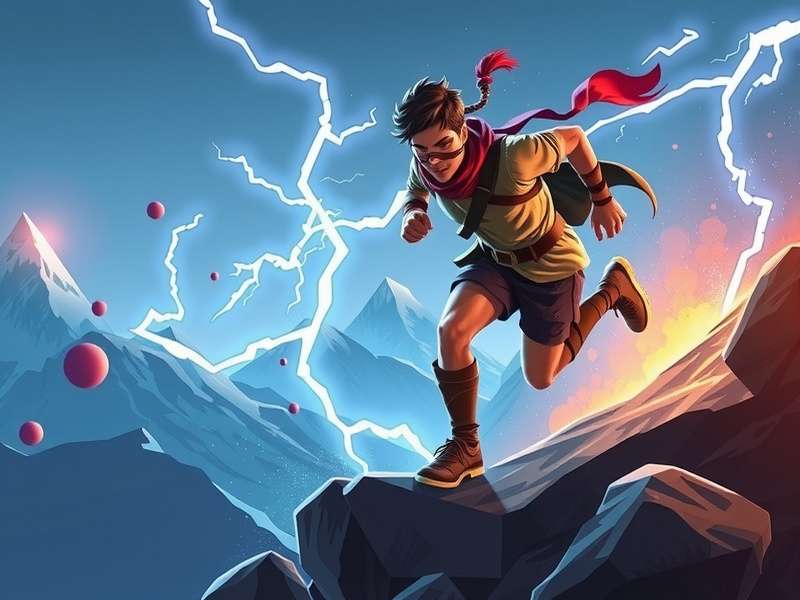
The world of Agile Ninja Runner is a love letter to India's diverse landscapes and cultures. Each of the game's five worlds is inspired by a real region of India, with attention to detail that makes the environments feel authentic and immersive.
• Himalayan Peaks: The starting point of Arjun's journey. This world features snow-capped mountains, ice caves, and the ruins of the Ninja Clan's village. The environment is harsh and unforgiving, with avalanches and blizzards that add to the challenge. The village ruins are filled with clues about the clan's history and Raka's betrayal. • Ancient Temple Ruins: Located in central India, these ruins are said to be the birthplace of the Agile Sapphire. The world is overgrown with vines and moss, with crumbling stone pillars, hidden chambers, and a sacred pond. The temple is guarded by corrupted spirits and traps set by Raka's minions. • Urban Mumbai Streets: Arjun's first taste of modern India. This world features bustling markets, busy highways, and narrow alleyways. The contrast between the traditional ninja and the modern city creates exciting gameplay moments—e.g., Arjun jumping over cars, sliding under buses, and fighting gangsters in a crowded bazaar. The world also includes iconic Mumbai landmarks, such as the Gateway of India (reimagined as a ninja training ground). • Thar Desert Oases: A vast desert with sand dunes, oasis villages, and ancient forts. The world is home to nomadic tribes who help Arjun on his journey, providing him with supplies and information about Raka's movements. The desert features sandstorms that reduce visibility and quicksand pits that can trap Arjun if he's not careful. • Coastal Kerala Backwaters: The final world before facing Raka. This lush, green region features backwaters, coconut groves, and houseboats. The calm, serene environment is a stark contrast to the chaos of the previous worlds, symbolizing Arjun's inner peace and readiness for the final battle. The world is guarded by Raka's most powerful minions, including a giant crocodile and a corrupted priestess.
Each world includes hidden areas that reveal more about the game's lore—e.g., ancient inscriptions in the temple ruins that explain the origin of the Agile Sapphire, or a nomadic elder in the desert who tells Arjun about Raka's past. These hidden areas add depth to the world and encourage players to explore beyond the main path.
3.3 Villains & Allies
Arjun is not alone on his journey—he is joined by a cast of memorable allies who help him overcome obstacles and defeat enemies. He also faces a variety of villains, each with their own motivations and backstories.
Allies: • Meera: A 22-year-old archer from Rajasthan, Meera meets Arjun in the Thar Desert. She is the daughter of a nomadic tribe leader and a skilled warrior in her own right. Meera is fierce, independent, and has a sharp sense of humor. She joins Arjun's quest to avenge her father, who was killed by Raka's minions. Meera provides long-range support in battles and helps Arjun navigate the desert. • Raj: A 16-year-old tech-savvy street kid from Mumbai, Raj is a self-proclaimed "ninja of the city". He uses his knowledge of Mumbai's streets and his homemade gadgets (e.g., smoke bombs, grappling hooks) to help Arjun. Raj is playful and optimistic, providing comic relief in tense moments. He joins Arjun's quest because he wants to prove that he's more than just a street kid. • Guru Dev: A 70-year-old monk who lives in the Ancient Temple Ruins. Guru Dev is a former member of the Ninja Clan who left the Himalayas to seek enlightenment. He is wise and patient, teaching Arjun new abilities (e.g., the Fire Kick, the Lotus Barrier) and helping him come to terms with his grandfather's death. Guru Dev believes that Arjun's empathy is his greatest strength, not his fighting skills.
Villains: • Raka: The main antagonist. Raka is a 45-year-old former ninja who was once Arjun's grandfather's protégé. He was passed over for the role of guardian of the Agile Sapphire because the clan believed he was too ambitious and power-hungry. Fueled by jealousy, Raka betrayed the clan and stole the sapphire, hoping to use its power to become the ruler of India. Raka is cold, calculating, and deeply bitter—he believes the world owes him something for the "injustice" he suffered. • Kala: Raka's right-hand woman, a skilled assassin with the power to control shadows. Kala is loyal to Raka because he saved her life when she was a child. She is silent and deadly, using her shadow powers to ambush Arjun in dark areas (e.g., the temple ruins, the desert at night). • Bhima: A giant warrior with superhuman strength, Bhima is Raka's enforcer in the Mumbai Streets. He was once a professional wrestler who turned to crime after being cheated out of a championship. Bhima is brute force personified, using his fists and a giant club to defeat his enemies. • Naga: A corrupted priestess who guards the Kerala Backwaters. Naga was once a healer who used her powers to help the people of the backwaters, but she was corrupted by Raka's dark magic. She can control water and summon sea creatures to attack Arjun.
3.4 Narrative Progression
The story of Agile Ninja Runner unfolds over five acts, each corresponding to one of the game's worlds. Each act includes cutscenes that advance the plot, character interactions, and plot twists that keep players engaged.
• Act 1: Himalayan Peaks: Arjun escapes the burning Ninja Clan village after Raka steals the Agile Sapphire. His grandfather sacrifices himself to hold Raka off, telling Arjun to retrieve the gem. Arjun sets out into the Himalayas, determined to fulfill his promise. Along the way, he encounters his first obstacles and enemies, learning the basics of ninja combat. • Act 2: Ancient Temple Ruins: Arjun reaches the temple ruins, where he meets Guru Dev. The monk tells Arjun about the origin of the Agile Sapphire—how it was created by the gods to balance good and evil. Guru Dev also reveals that Raka is heading to Mumbai to use the sapphire's power to recruit an army of gangsters. Arjun learns new abilities from Guru Dev and defeats Kala in a tense battle. • Act 3: Urban Mumbai Streets: Arjun arrives in Mumbai, where he meets Raj. The street kid helps Arjun navigate the city and avoid the police (who have been bribed by Raka). Arjun confronts Bhima in a final battle in the middle of a busy highway, defeating him and learning that Raka is heading to the Thar Desert to meet with a group of bandits. • Act 4: Thar Desert Oases: Arjun travels to the desert, where he meets Meera. The archer helps Arjun find Raka's camp, where he is planning to use the Agile Sapphire to control the bandits. Arjun and Meera team up to defeat the bandit leader, but Raka escapes to the Kerala Backwaters, where he plans to perform a ritual to fully absorb the sapphire's power. • Act 5: Coastal Kerala Backwaters: Arjun, Meera, and Raj travel to the backwaters, where they face Naga. After defeating her, they reach Raka's floating fortress, where the final battle takes place. Arjun uses all the abilities he's learned on his journey, and with the help of his allies, he defeats Raka and retrieves the Agile Sapphire.
The game's climax features a emotional moment where Arjun confronts Raka, who reveals that he stole the sapphire not just for power, but because he felt betrayed by the clan. Arjun empathizes with Raka's pain but tells him that revenge is not the answer. Raka, defeated and broken, admits his mistake, and Arjun spares his life—choosing mercy over vengeance, a decision that honors his grandfather's teachings.
The post-credits scene hints at a sequel: Arjun returns the Agile Sapphire to the Ninja Clan, but a shadowy figure is seen watching him from afar. A voiceover teases a new threat: "The balance of good and evil is fragile... and a new darkness is rising." This sets up the next chapter in Arjun's journey, with fans eagerly awaiting news of Agile Ninja Runner 2.
4. Development
The development of Agile Ninja Runner was a three-year journey for Daman Games, a studio founded in 2018 by a group of passionate gamers and developers who wanted to create games that reflect Indian culture. The team, based in Delhi, started with a simple idea: to make a runner game that Indians can relate to, with settings, characters, and themes that resonate with local audiences.
Unlike many Indian game studios that focus on casual games like Ludo or Candy Crush clones, Daman Games set out to create a high-quality action-adventure game that could compete with international titles—while staying true to Indian roots. The team conducted extensive market research, surveying over 5,000 Indian gamers to understand their preferences: 78% wanted games with Indian settings, 65% preferred offline play, and 82% wanted games optimized for budget smartphones. This research shaped every decision during development.
4.1 Development Team
The core development team of Agile Ninja Runner consisted of 25 people, with additional contributors for voice acting, music, and localization. Key members of the team include:
• Rohit Sharma: Lead Developer and Co-Founder of Daman Games. With over 10 years of experience in mobile game development, Rohit oversaw the technical aspects of the game, including optimization and control design. He has a background in computer science from the Indian Institute of Technology (IIT) Delhi. • Priya Patel: Game Designer. Priya was responsible for level design, gameplay mechanics, and progression systems. She previously worked at a international game studio but left to join Daman Games because she wanted to create games for Indian audiences. • Akash Singh: Narrative Designer. Akash wrote the game's story and dialogues, drawing inspiration from his love of Indian mythology and folk tales. He is a published author of fantasy novels set in ancient India. • Meera Rao: Art Director. Meera led the art team, creating the game's visual style and designing characters, environments, and UI. She studied animation at the National Institute of Design (NID) Ahmedabad and specializes in blending traditional Indian art with modern digital design. • Rajesh Kumar: Sound Designer. Rajesh created the game's soundtrack and sound effects, using a mix of traditional Indian instruments and modern electronic music. He has worked on several Bollywood films and independent music projects.
The team also collaborated with 8 regional voice actors to record dialogues in Hindi, Tamil, Telugu, Kannada, Malayalam, Bengali, Gujarati, and Punjabi. The voice actors were chosen for their ability to bring authenticity to the characters—for example, Ankit Tripathi, a popular Hindi voice actor, voiced Arjun, while Priya Sharma, a Tamil voice artist, voiced Meera.
4.2 Inspiration & Vision
The inspiration for Agile Ninja Runner came from two main sources: international runner games like Temple Run and Subway Surfers, and Indian mythology and culture. The team wanted to combine the fast-paced, accessible gameplay of runner games with the rich storytelling and imagery of Indian mythology.
In an interview with GamingBolt India, lead developer Rohit Sharma said: "We love games like Temple Run, but we always felt that they didn't reflect our reality. Why can't a ninja run through the Himalayas instead of a generic jungle? Why can't power-ups be inspired by our street food and mythology instead of generic coins and magnets? We wanted to create a game that makes Indian gamers think, 'This is our game'."
The team also drew inspiration from Bollywood action films, which are known for their over-the-top stunts and emotional storytelling. Many of the game's combat sequences and cutscenes are inspired by films like Baahubali and Dhoom, with Arjun performing acrobatic moves and dramatic jumps that feel like they're straight out of a Bollywood blockbuster.
The vision for Agile Ninja Runner was simple: to create a game that is "globally competitive but locally relevant". The team wanted to prove that Indian game studios can create high-quality games that appeal to both Indian and international audiences, without sacrificing cultural authenticity. This vision guided every decision during development, from the choice of locations to the design of power-ups.
4.3 Challenges & Solutions
The development of Agile Ninja Runner was not without challenges. The team faced several obstacles, but they used their creativity and understanding of the Indian market to overcome them.
• Optimization for Budget Smartphones: One of the biggest challenges was optimizing the game for low-end smartphones, which are widely used in India. Many international games have high system requirements, making them unplayable on budget devices. To solve this, the team used Unity Engine's optimization tools to reduce the game's file size to under 100MB. They also simplified the graphics for low-end devices, with an option to switch between "Performance Mode" (lower graphics, higher frame rate) and "Quality Mode" (higher graphics, lower frame rate). • Localization for Multiple Languages: Translating the game into 8 regional languages was a complex task, as each language has its own nuances and cultural references. The team hired native speakers to translate the dialogues and UI, ensuring that the humor and emotion of the story were preserved. They also adjusted cultural references for each region—for example, in the Tamil version, the vada pav collectible is replaced with a dosa, a popular South Indian food. • Balancing Gameplay for Different Skill Levels: The team wanted the game to be accessible to new players while still challenging experienced gamers. They solved this by implementing four difficulty levels and an adaptive difficulty system, as well as extensive playtesting with users of all skill levels. Beta testers included both children (as young as 8) and adults (as old as 60), ensuring the game was fun for everyone. • Creating Authentic Indian Environments: To make the game's locations feel authentic, the team conducted extensive research—including traveling to the Himalayas, Mumbai, and Kerala to take photos and videos. They also consulted with cultural experts to ensure that the architecture, clothing, and music of each region were accurately represented. For example, the Kerala Backwaters world features traditional houseboats (kettuvallams) and coconut groves, while